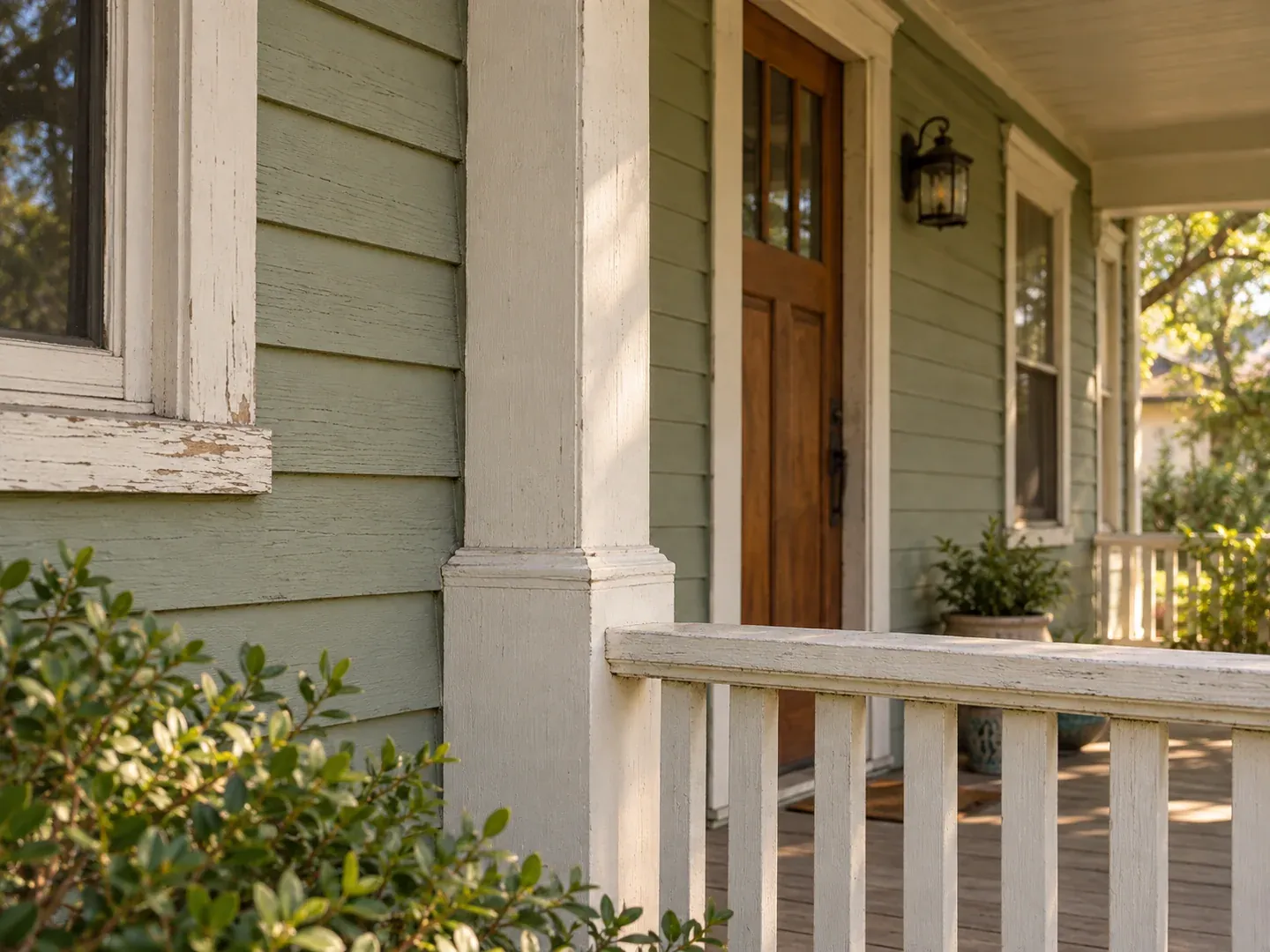
Scheduling exterior work in Central Texas heat
Austin’s Camp Mabry weather station, about 15 miles away, averages about 123 days a year at 90°F or more, 29 of them at 100°F. For lead work that means we start early in protective clothing, weight the plastic ground cover against wind, and watch the temperature limits that coating makers set for primers and encapsulants. In the cooler months, we lose fewer working hours to heat.
Which rules apply to exterior work
If the goal is to get the lead off the house for good, the job is abatement under DSHS rules. That takes a DSHS-certified firm, and DSHS must hear about it at least seven working days before work starts. If we are disturbing paint for another reason, like repainting or replacing trim, EPA’s RRP rule applies instead; see lead-safe remodeling for the difference. Outside, that means ground sheeting at least 10 feet past the work, or farther to catch falling debris, and a certified renovator checking the ground and sills when the work is done. Exterior work disturbing 20 square feet or less is exempt as a minor repair.
Paint that is still sound does not have to come off; lead paint encapsulation and enclosure seals it instead. If chips have already reached the yard or been tracked inside, lead dust cleanup and clearance testing deals with that. For the full list, see every service we offer.